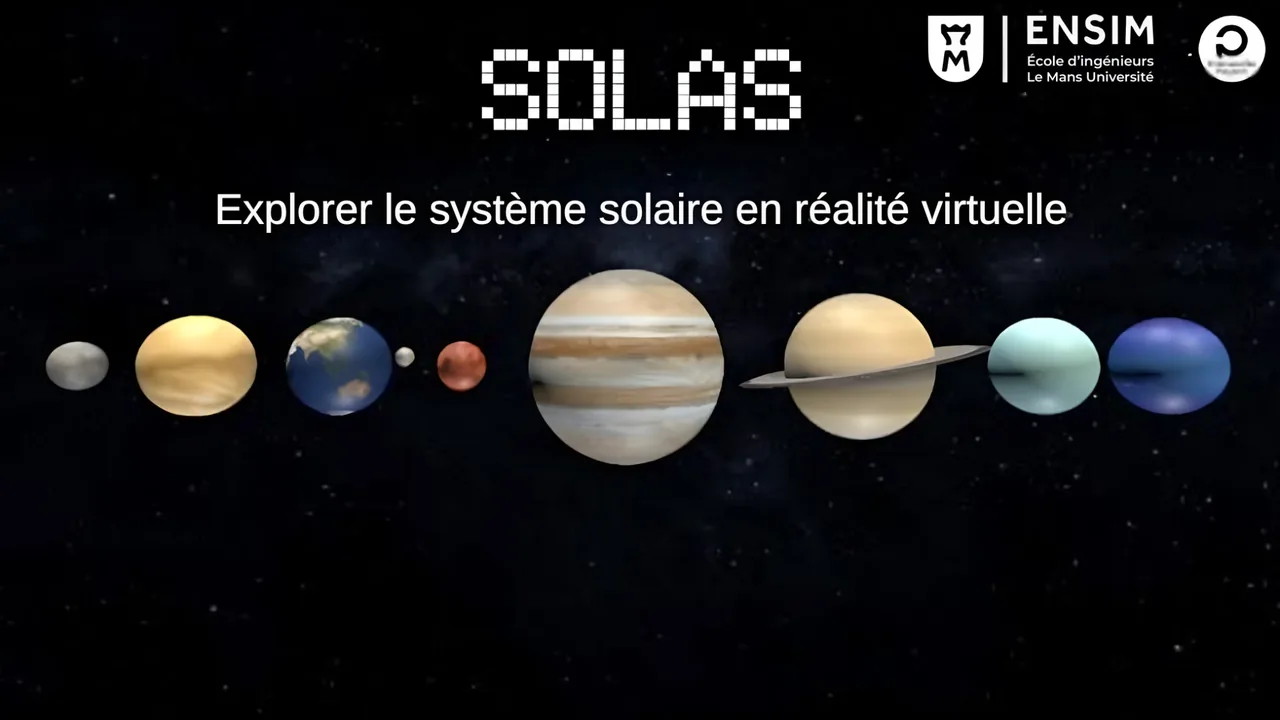
At a glance
- Dates
- –
- Context
- Technologies
Overview
Serious game for learning astronomy in VR.
Problem
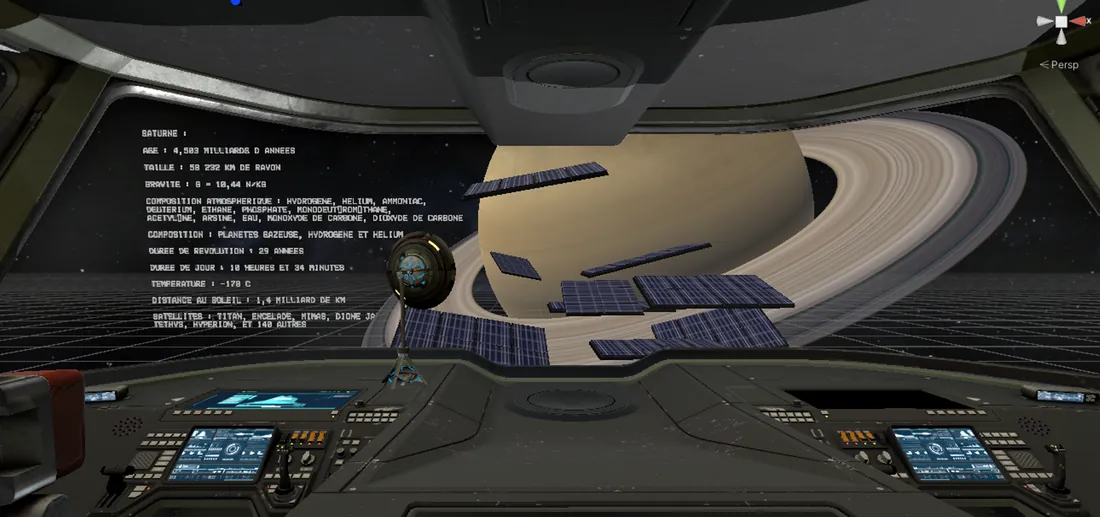
Give a young audience some scientific culture about the solar system, using the immersion of virtual reality to convey the vastness of space.
Role
Project lead, team of 4.
Decisions
A fixed route from planet to planet rather than free exploration, which was too heavy to build; three surfaces to land on (Moon, Mars, Earth); a text and a voice-over for each planet.
Result
A complete game, from the menu to the final scene, tested on Meta Quest 3. A first version was tried by many visitors at the ENSIM open day (25 January 2025).
My contribution
- A large part of the game’s C# scripts.
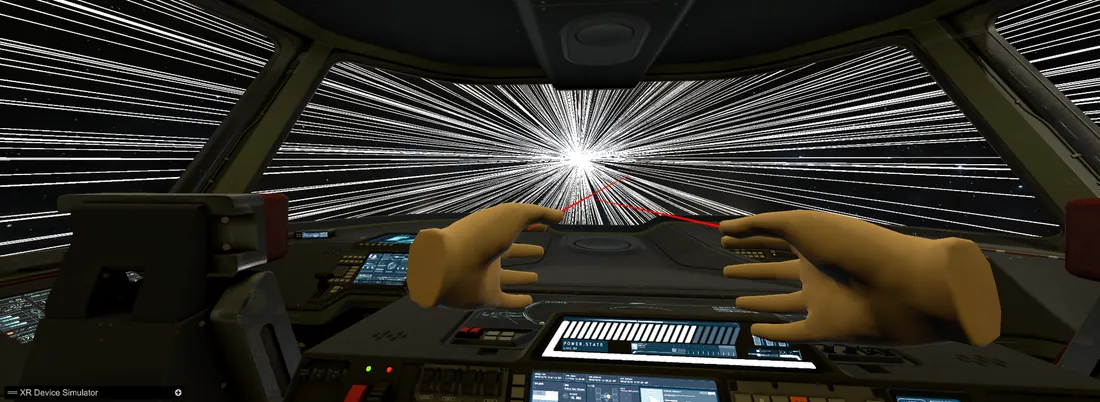
- The “light speed” loading screen: about 800 thin objects arranged in a cone and spun at high speed by a C# script, triggered when the engines start.
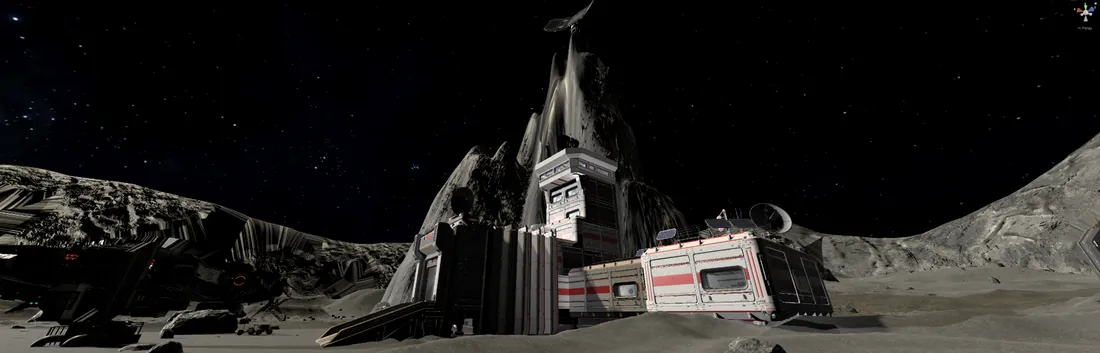
- The Moon scene: terrain built from scratch and textured with craters, lunar base, a satellite dish to collect flagged by a light animation, invisible walls at the edges, landing button.
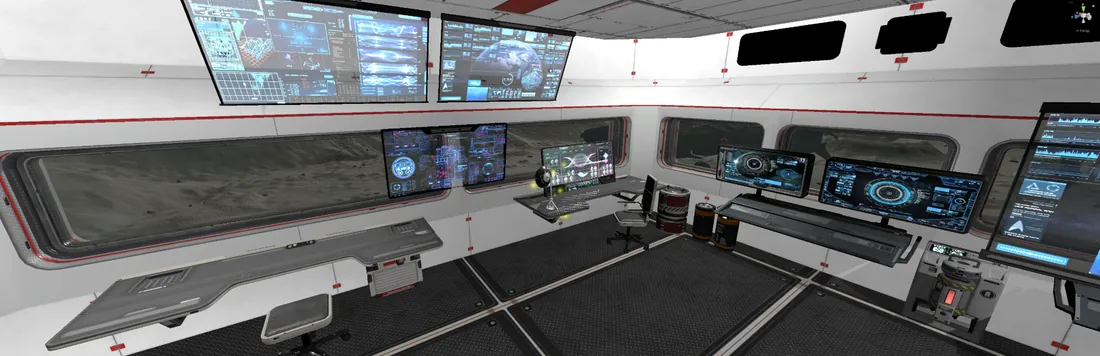
- Blender modelling of the ship’s kitchen, engines, battery and satellite dish.
- Research and educational texts on the Earth, Jupiter and the asteroid belt; voice-over recording.
Specification
| Requirement | Answer |
|---|---|
| Audience | Young people curious about astronomy: for each planet, a short text and a voice-over while the player looks at the planet. |
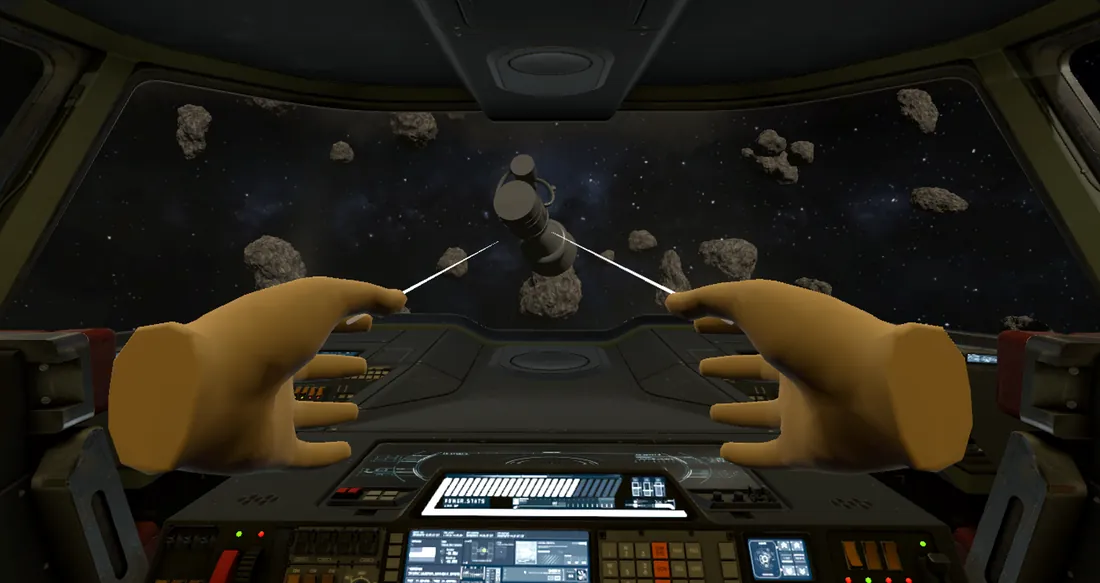
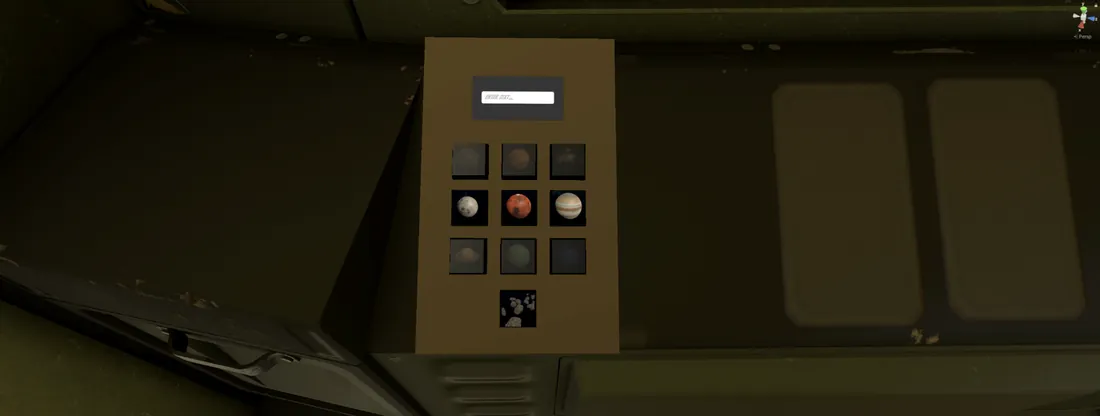
| Immersion | A virtual reality game: objects are grabbed by hand from the cockpit; travel uses a keypad and “Start engines” and “Land” buttons. |
| Progression | The ship has been hit by an asteroid: at each stop there is a part to collect, and the ship is rebuilt as the adventure goes on. |
| Exploration | Three surfaces to land on and walk around freely: the Moon, Mars and the Earth. |
| Atmosphere | Original music, sound effects, and a loading screen that simulates speed between two planets. |
| Testing | Unity’s XR simulator to iterate quickly, then a Meta Quest 3 headset to validate the real experience. |
| Complete project | Carried over one year by a team of four: scenario, modelling, development, testing. |
The player’s journey
A fixed order, from planet to planet: the initial idea of a free route was dropped because it multiplied the scenes and required a save system.
- Main menu
- Asteroid belt
- Mars surface to explore
- Jupiter
- Moon surface to explore
- Earth surface to explore
- Mercury
- Venus
- Saturn
- Uranus
- Neptune
- Final scene
In pictures
Results
- stops: the asteroid belt, the Moon and the eight planets
- 10
- surfaces to explore on foot
- 3
- animated objects for the speed effect
- ≈ 800
- of work, as a team of four
- 1 year
A complete game, from the main menu to the final scene, played through in full by all four team members on a Meta Quest 3.
A first stable version was shown at the ENSIM open day on 25 January 2025: many visitors tried it and shared their impressions.