At a glance
- Dates
- –
- Context
- Technologies
Overview
VR minigolf on an island of ancient temples, built as a pair.
Problem
Build a virtual reality minigolf game in a peaceful world: an island surrounded by the sea, where a mascot welcomes players and shows them the moves.
Role
Built as a pair. My part: the island, the menus and their interfaces, the C# scripts (score, menus, ball physics) and the mascot’s animations.
Decisions
Merge our two initial ideas into a single world; have an animated mascot demonstrate the swing; have the ball struck with a real movement, club in hand.
Result
A game in two scenes: a start menu, then the island and its three courses, all playable to the end: you pick up a club, strike the ball and track your number of strokes.
The game
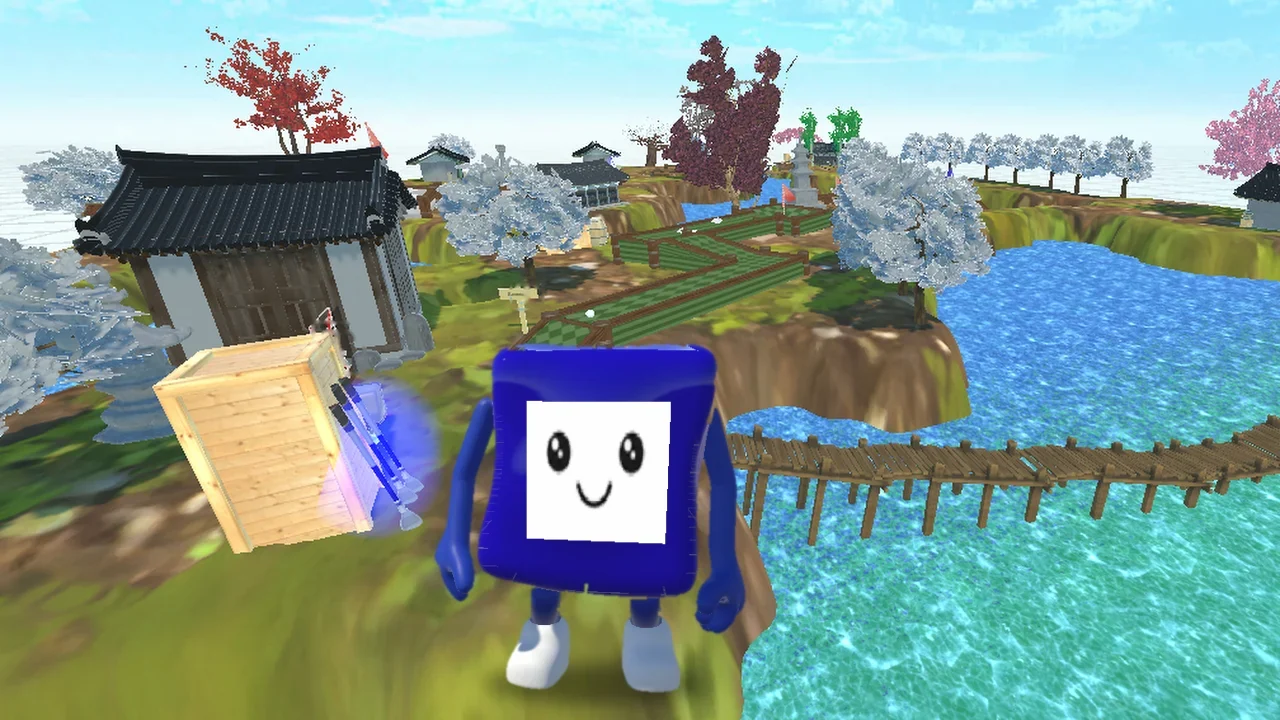
A virtual reality minigolf game, on an island off the coast of Korea. The planet is covered by the seas: only the summits emerge, with their ancient temples. The player appears on an islet, crosses a bridge and reaches the main island, where a mascot is waiting to show how to play.
The concept merges our two initial ideas: minigolf courses in settings from around the world, and a futuristic world where small sea creatures have replaced humans.
Scenery, sounds and music: assets from the Unity Asset Store, including Korean temple models from the Korea Heritage Service.
My contribution
- The island, in Unity: terrain, water, trees, buildings, bridges and props, sky, invisible walls at the edges.
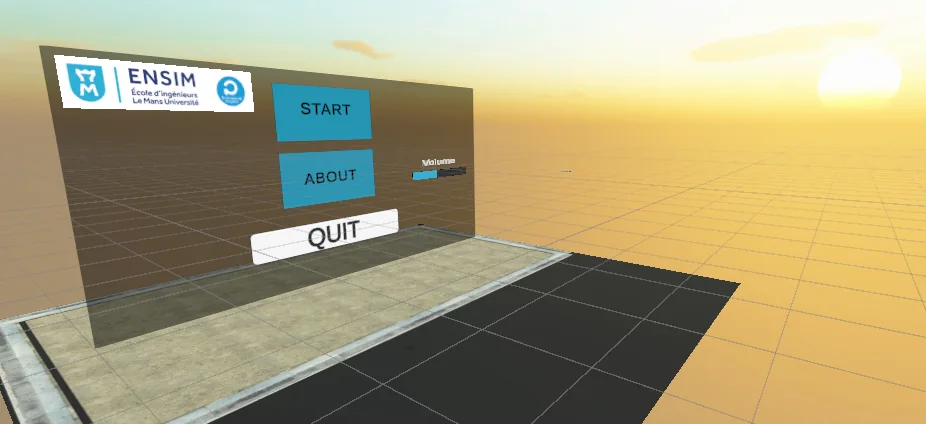
- The menus and their interfaces: the start scene and the in-game menu.
- The C# scripts: score, menus, ball physics on contact with the club.
- In Blender: the mascot’s animations and the rework of part of its skeleton.
- Importing the assets and tidying the project.
About 50 hours of development on my side. My teammate built the minigolf courses and modelled the mascot.
Specification
| Expected | Answer |
|---|---|
| World | A peaceful island surrounded by the sea: temples, trees, traditional buildings, and ambient music from the moment you arrive. |
| Mascot | A creature made of “sea molecules”, with arms and legs. It welcomes the player and repeats the move to make, in a loop. |
| Courses | Three courses, winding between the buildings. All three can be played to the end. |
| Moving | With the left joystick; you look around by really turning your head. |
| Grabbing the club | Aim at it, arm outstretched, and press the trigger. A blue halo shows it can be picked up; once released, it falls to the ground. |
| Striking | Aim at the ball with the club head and make a real swing. |
| Score | The number of strokes stays on screen, to make players want to try again with fewer strokes. |
| Menus | Start: play, credits, quit, volume. In game: volume and quit. |
The mascot, from sketch to engine
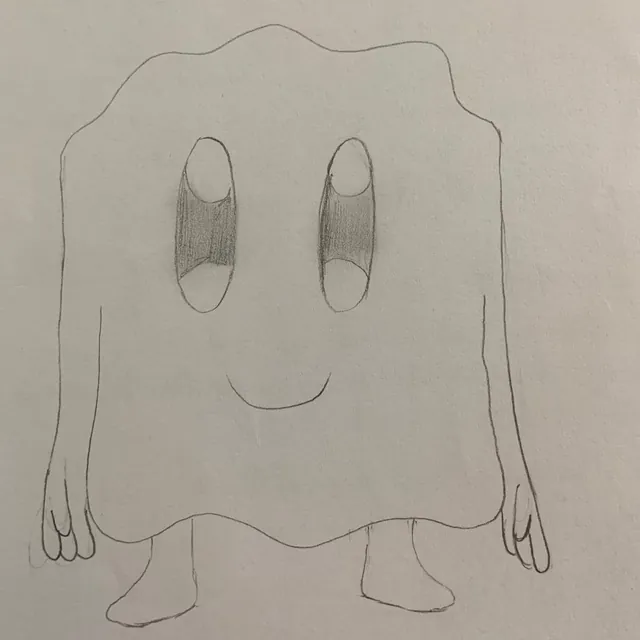
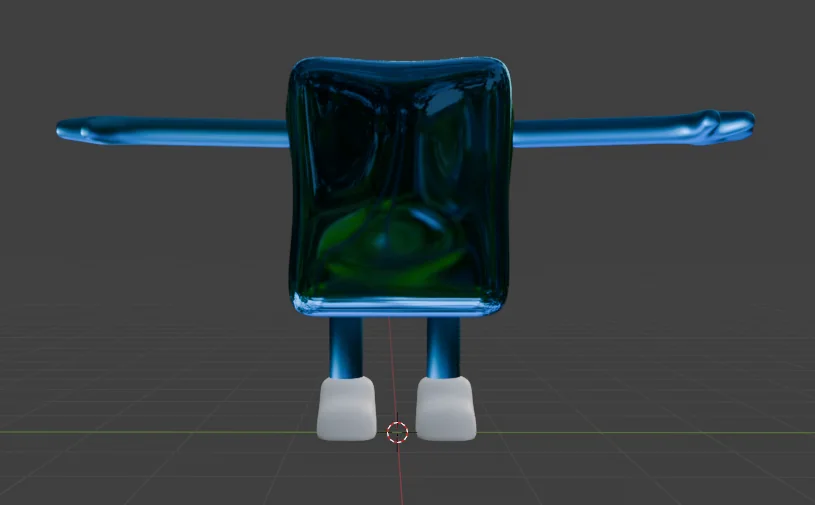
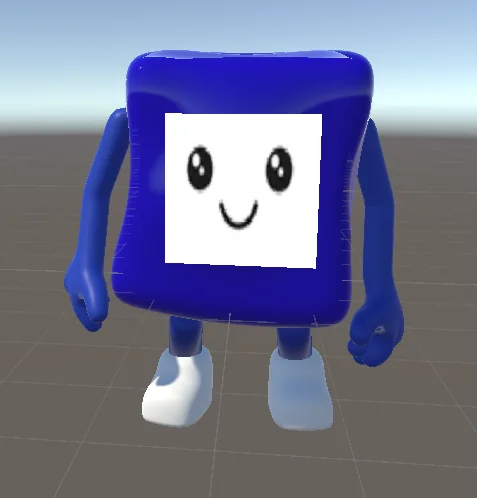
Drawn and modelled by my teammate, the mascot is anything but humanoid: its one-block body holds both the head and the torso. The skeleton created with Mixamo therefore distorted it with every arm movement: I reworked part of its bones in Blender and worked on its animations (Blender and Mixamo). Its material did not carry over from Blender to Unity: it was recreated there.
The start scene
The game opens on a floating menu, operated with the trigger.
Method
- To locate a bug: change a value, comment out a line, test again.
- Ball physics: a script applies a force to the ball on contact with the club, tuned so that the stroke stays playable.